PhD candidate, Mechanical Engineering, Stanford University
Zev Granowitz is a PhD candidate in the Hanson Research Group at Stanford’s High Temperature Gasdynamics Laboratory, advised by Prof. Ronald K. Hanson. His research develops laser and lamp absorption spectroscopy techniques for high-temperature and nonequilibrium gases, with applications in hypersonic flight and atmospheric entry. He expects to finish his PhD in summer 2027.
He leads the development of a broadband laser absorption technique for shock tube experiments. It pairs a femtosecond laser, a high-resolution spectrometer, and a high-speed camera to record absorption lineshapes directly, so they no longer have to be deconvolved from a broad light source. A single experiment yields hundreds of spectrally resolved species measurements.
Manuscript in preparation.
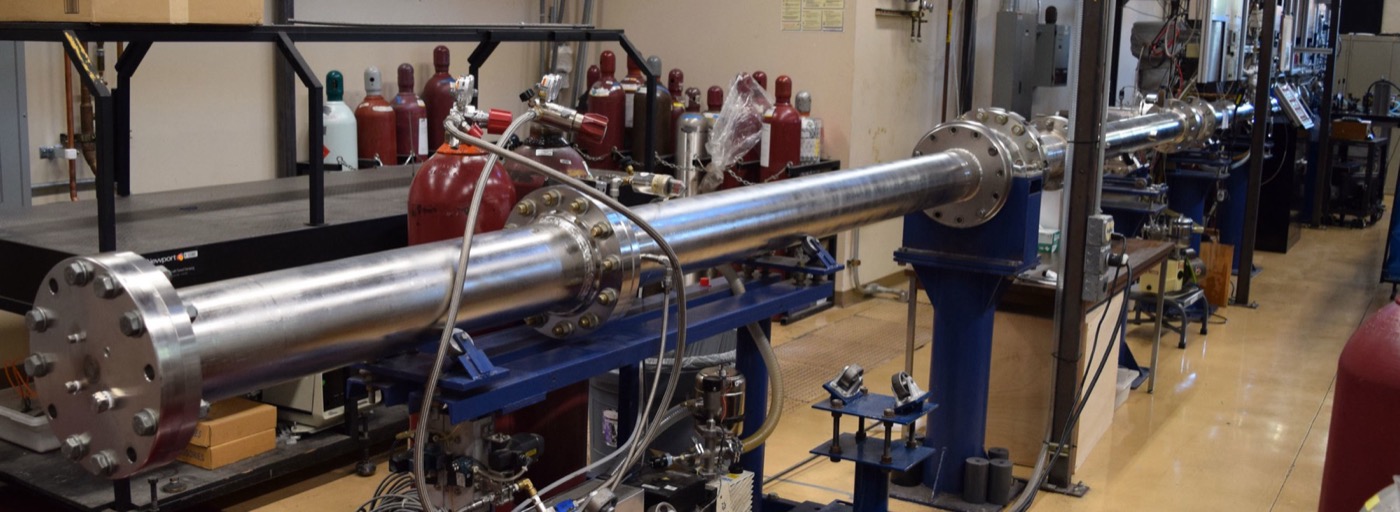
An arc jet test at NASA Ames Research Center. Photo: Hanson Research Group.
Arc jet diagnostics at NASA Ames
NASA tests spacecraft heat shields in its arc jets, where the gas runs hotter than 7000 K and no probe survives. He installed the first infrared laser absorption diagnostic at the 60 MW arc jet facility, designing its optical access and fiber-coupled delivery, aligning it on site, and running acquisition during tests. The measurements gave axial profiles of temperature, enthalpy, and flow nonuniformity that ground-test engineers previously had no way to measure.
The NASA shock tube at Stanford, the group’s facility for high-temperature air chemistry. Photo: Hanson Research Group.
Excited atomic nitrogen in shock-heated gases
Models of the heating a spacecraft sees during atmospheric entry depend on how quickly collisions excite nitrogen atoms. Using atomic resonance absorption spectroscopy in the NASA shock tube, he measured collisional excitation rates of the excited states N(2D) and N(2P) in nitrogen-argon mixtures from 5,100 K to 6,400 K.
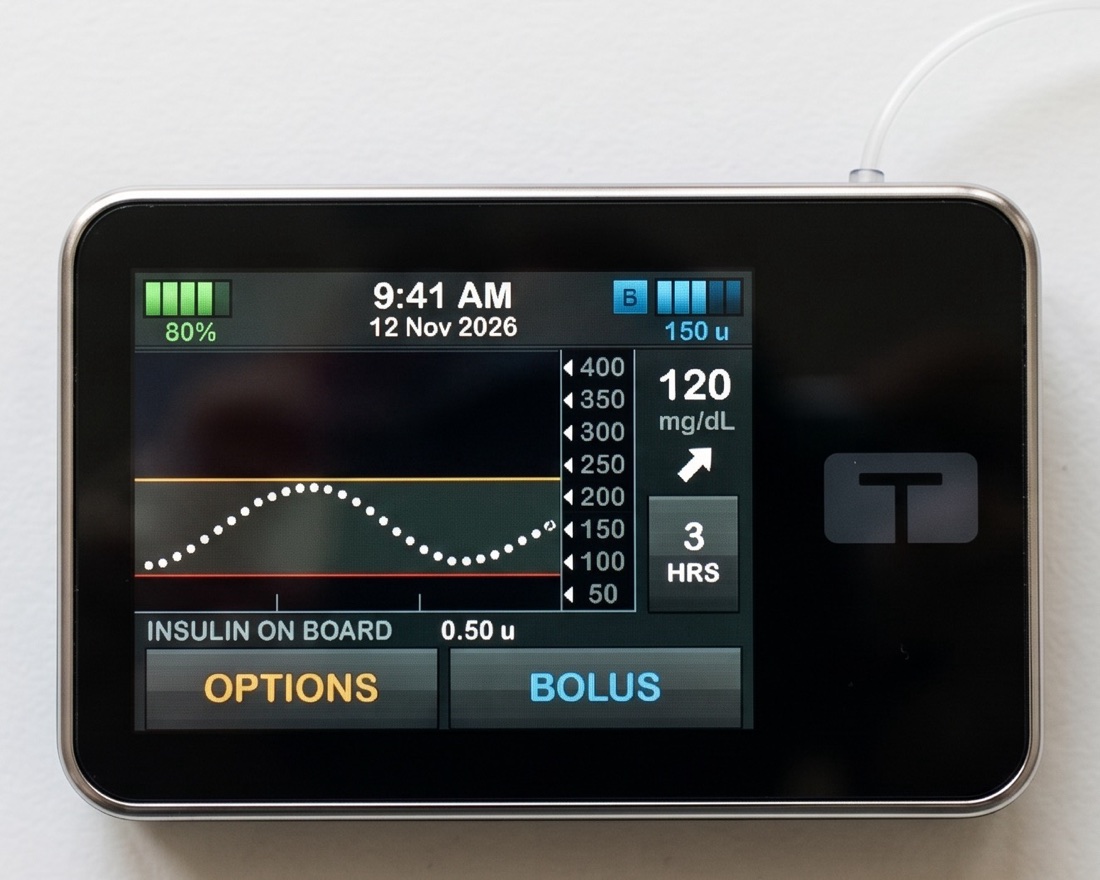
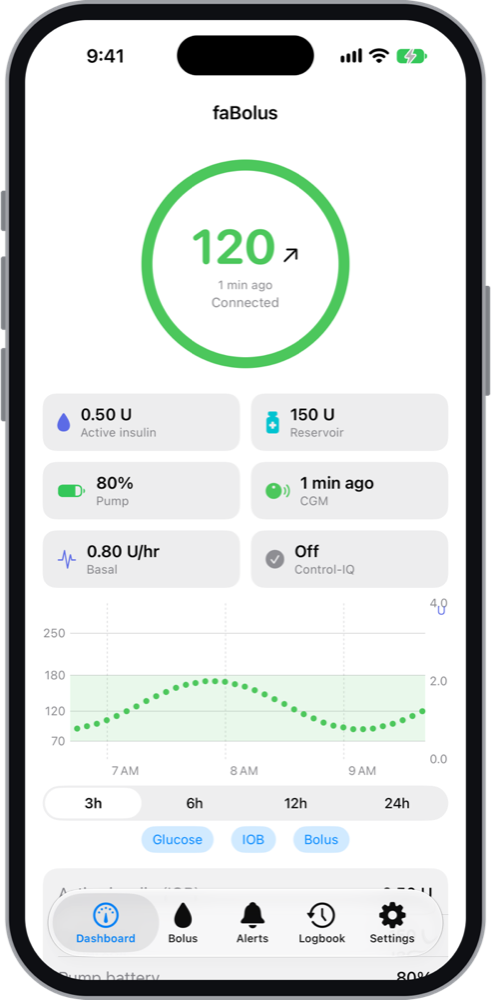
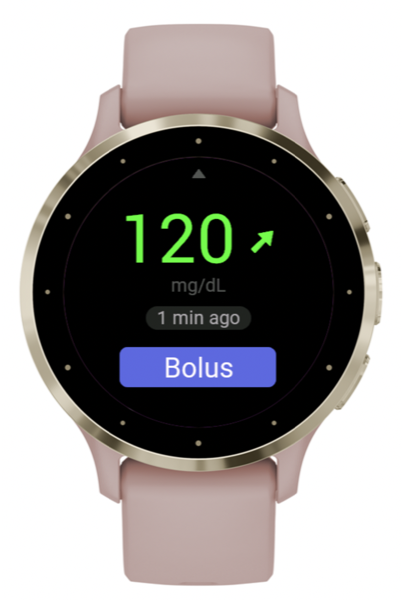
The iPhone is the only device that talks to the pump, which passes along glucose from the Dexcom sensor. The watch is a remote: it shows glucose and can ask the phone for a bolus, which the phone checks against the same rules as its own bolus screen. App screens show demo data. Pump image generated with Gemini.
He co-created and leads faBolus, an open-source app that lets people with type 1 diabetes dose insulin and read glucose from an iPhone or Garmin watch instead of handling their Tandem t:slim X2 pump. He directs the LLM coding agents that write the implementation and owns the requirements, architecture, safety review, evaluation design, and documentation. faBolus is not a medical device, is not FDA cleared, and is not affiliated with Tandem Diabetes Care.